
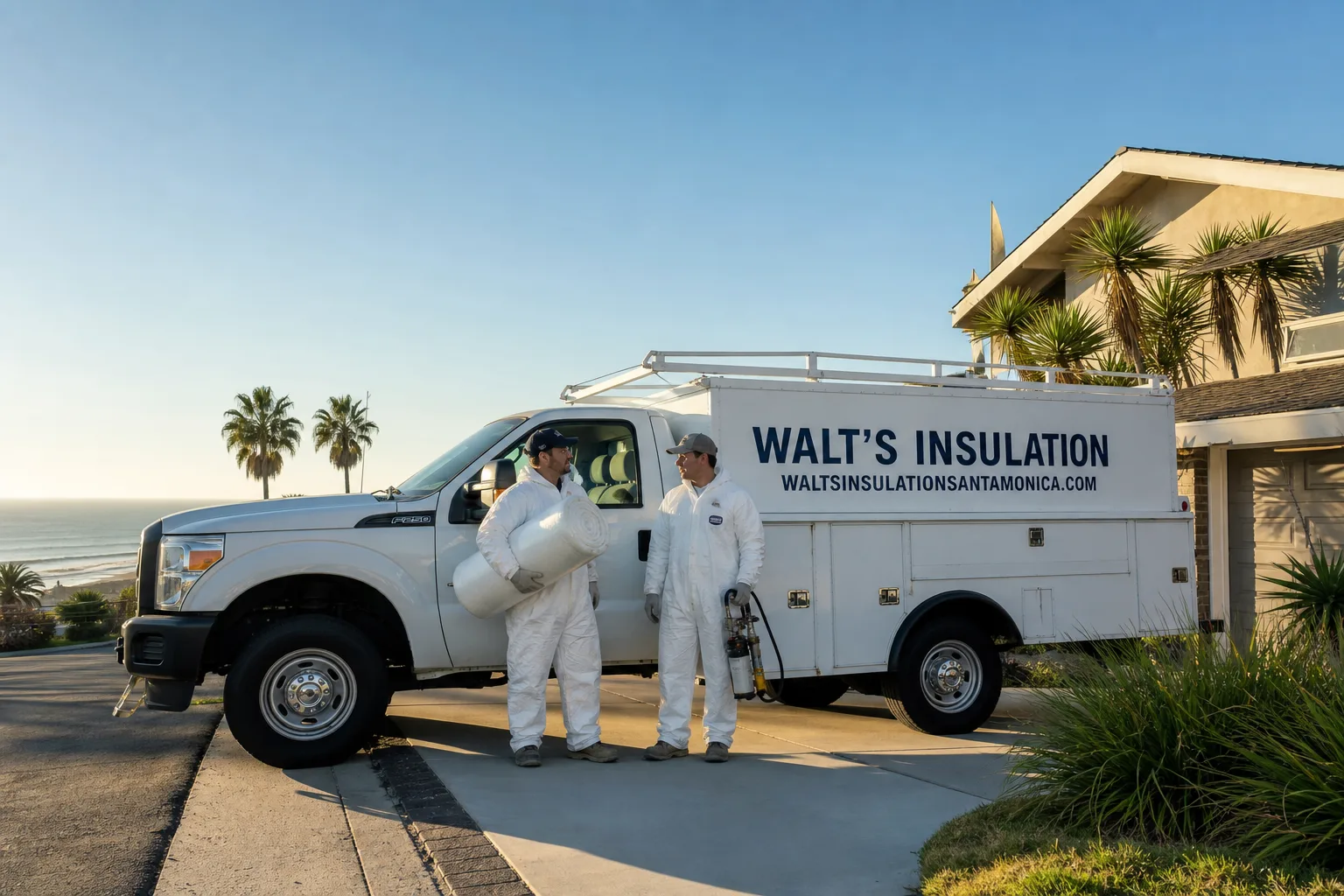
How Much Does a Home Energy Audit Cost in Santa Monica?
A Home Energy Audit in Santa Monica, CA typically costs between $250 and $650 for a standard residential assessment, with larger or older homes pushing that figure closer to $800 or more. Most Santa Monica homeowners pay around $350 to $500 for a thorough whole-home audit that includes blower door testing, thermal imaging, and a written report. Some utility-sponsored programs through Southern California Edison or SoCalGas reduce that cost significantly – or cover it entirely – depending on your income bracket and current usage profile.
Home Energy Audit Cost Breakdown (2026)
Here is what Santa Monica homeowners are actually paying for each type of assessment in 2026. These ranges reflect real quotes in the local market – not national averages pulled from a database in another state.
| Audit Type | What’s Included | Typical Cost (Santa Monica) |
|---|---|---|
| Basic Walk-Through Audit | Visual inspection, basic checklist, verbal recommendations | $100 – $200 |
| Standard Home Energy Audit | Blower door test, duct leakage test, insulation assessment, written report | $300 – $500 |
| Full Diagnostic Audit | All of the above plus infrared/thermal imaging, combustion safety test, HVAC efficiency analysis | $500 – $800 |
| Utility-Sponsored Audit (SCE / SoCalGas) | Varies by program; often includes blower door and basic report | $0 – $150 (subsidized) |
| Audit + Insulation Assessment Add-On | Dedicated attic and wall insulation R-value inspection with upgrade estimates | $50 – $150 add-on |
| HERS Rating (Title 24 Compliance) | Required for permitted additions or HVAC replacements; formal energy score | $250 – $450 |
What Pushes the Price Up – or Down
The single biggest driver of cost is home size. A 900-square-foot bungalow in the Wilshire Montana neighborhood is a fundamentally different job than a 2,800-square-foot two-story in Sunset Park or a 1960s ranch home in the Mid-City area near Olympic Boulevard. Auditors spend more time, use more equipment, and produce longer reports for larger homes.
Age matters too. Santa Monica has a lot of housing stock built between 1940 and 1975 – the era before California’s Title 24 energy code existed. Those homes almost always have more issues to document: missing attic insulation, uninsulated walls, original single-pane windows, and duct systems that were never sealed. A thorough auditor cannot rush through one of those houses the way they might a newer build, which is reflected in the time billed.
Infrared thermal imaging is the line item most homeowners skip but probably should not. It adds $100 to $200 to the base price, but it finds heat loss and air infiltration behind walls and around recessed lights that no visual inspection catches. In a Santa Monica home with finished walls and a two-story layout, thermal imaging often pays for itself in a single heating season by pointing to insulation gaps you would never otherwise know about.
Finally, certification level affects price. An auditor certified by BPI (Building Performance Institute) or RESNET commands a higher rate than a general contractor offering an “energy walk-through.” For any audit that will support a permit application, a rebate claim, or a real estate disclosure, you want a certified auditor and a formal written report – not a verbal opinion.
What Affects Home Energy Audit Pricing in Santa Monica
- Home square footage: Most auditors price per square foot or by bracket. Homes under 1,500 sq ft fall in the lower range; anything above 2,500 sq ft typically hits $500 or more for a full diagnostic audit. Santa Monica’s dense bungalow neighborhoods (Ocean Park, North of Montana) skew smaller, which keeps costs down for many residents.
- Coastal climate and specific air-sealing needs: The marine layer that rolls in off the Pacific most mornings keeps Santa Monica cooler than inland Los Angeles, but it also drives moisture into attic spaces and wall cavities. Auditors familiar with the local climate check for vapor-related problems that an inland auditor might not prioritize – and that adds time to the inspection.
- Home construction era and type: Pre-1978 construction (common in Pico neighborhood and parts of Santa Monica Canyon) often involves knob-and-tube wiring, uninsulated balloon-frame walls, and original duct systems. These homes require more detailed analysis and a longer report. Post-2000 construction typically audits faster because the baseline energy code was stricter.
- Blower door and duct leakage testing: These diagnostic tools are the backbone of any audit worth paying for. Blower door tests pressurize the home to measure total air infiltration; duct leakage tests find where conditioned air is escaping before it reaches living spaces. Both add time and equipment cost, but without them, the auditor is guessing.
- Permit and HERS compliance requirements: California’s Title 24 energy code requires a certified HERS rater for certain permitted work – HVAC replacements, additions, and some insulation upgrades. A HERS rating is a separate service from a general energy audit, and the documentation requirements drive up the price. If you’re pulling a permit for work in Santa Monica, ask upfront whether a HERS rating is required.
- Auditor certification and experience: A BPI-certified building analyst or RESNET-certified HERS rater carries more credibility with utility rebate programs and permit offices than a general contractor. That certification comes with higher overhead and typically higher rates, but the report holds up when you need it to – for rebates, real estate transactions, or contractor bids.
What a Home Energy Audit Actually Looks At
A lot of homeowners picture someone walking around with a clipboard. The reality of a full diagnostic audit is considerably more involved, and understanding what happens during the visit helps you evaluate whether you’re getting your money’s worth.
The Blower Door Test
The auditor temporarily mounts a powerful calibrated fan in an exterior doorway, seals the door frame, and depressurizes the house. The fan measures how much air rushes in to equalize pressure – that number tells the auditor exactly how leaky the building envelope is. In Santa Monica homes built before 1980, results are often two to three times worse than current code allows. The test itself takes about 30 minutes, and the results directly shape the rest of the inspection.
Thermal Imaging
An infrared camera reads surface temperature differences, which reveal where heat is transferring through walls, ceilings, and around windows in ways the naked eye cannot see. In a home in the Wilshire Boulevard corridor where original plaster walls cover balloon-frame cavities, thermal imaging regularly finds insulation voids that explain why one room always runs hot or cold. It also catches moisture accumulation before it becomes mold – a relevant concern given Santa Monica’s coastal humidity.
Attic and Crawl Space Assessment
This is where our team at Walt’s Insulation adds the most value alongside a standard audit. Attics in Santa Monica homes – especially those built between 1950 and 1970 – frequently have R-11 or R-13 batts where R-38 is now the minimum. Older blown-in fiberglass that has settled over decades can measure three or four inches where it should be ten. The auditor documents existing R-value, checks for air sealing failures around recessed lights and top plates, and flags any rodent damage or moisture intrusion.
Crawl spaces in Santa Monica’s older single-story homes often have exposed earth floors, deteriorated vapor barriers, and uninsulated subfloors. A proper audit documents all of it.
HVAC and Duct System Review
Duct leakage is one of the most expensive and least-visible energy problems in Southern California homes. The California Energy Commission estimates that the average home loses 20 to 30 percent of conditioned air through duct leaks before it reaches the living space. The auditor tests duct tightness with a duct blaster, checks equipment efficiency ratings, and notes whether duct runs pass through unconditioned attic space – which is common and costly in Santa Monica’s older housing stock.
Santa Monica-Specific Energy Context
Santa Monica’s climate does not behave like the rest of Los Angeles. The city sits directly on the coast, and the marine layer keeps summer afternoons 10 to 15 degrees cooler than Culver City or West Hollywood just a few miles inland. For most of the year, a well-insulated Santa Monica home actually needs very little mechanical cooling – the bigger energy drain is the mild but persistent thermal losses in winter evenings and the moisture management challenges the coastal air creates year-round.
That context matters for how you prioritize audit findings. In an inland city, an auditor might lead with cooling load reductions. In Santa Monica, the more impactful recommendations usually focus on air sealing, attic insulation to reduce radiant heat gain through the roof, and duct tightening to reduce the runtime of equipment that’s already working in a mild climate. A generic auditor who doesn’t account for the local microclimate may steer you toward upgrades that don’t match Santa Monica’s actual energy profile.
Santa Monica also falls under the City’s own sustainability goals and building codes, which in some cases go beyond California’s Title 24 baseline. If you’re doing permitted work, it’s worth confirming with your contractor what the city requires – Walt Brenner and the team at Walt’s Insulation have navigated Santa Monica permit requirements on jobs in Ocean Park, Sunset Park, and the North of Wilshire neighborhoods, and we can point you toward the right documentation before the first nail is pulled.
Utility Rebates and Programs That Lower Your Cost
Southern California Edison and SoCalGas both run programs that can reduce or eliminate the cost of an energy audit for qualifying homeowners. The specifics change year to year, but as of 2026 the following pathways are worth exploring before you pay full price out of pocket.
SCE and SoCalGas Income-Qualified Programs
The Energy Savings Assistance (ESA) program provides free home energy audits and weatherization services to income-qualified customers. Eligibility is based on household income relative to the federal poverty level. If you qualify, not only is the audit free, but the utility may also pay for basic air sealing and insulation upgrades identified in the report. The program is underutilized in Santa Monica – many homeowners assume they don’t qualify without checking.
Home+
SoCalGas runs a Home+ program (formerly called Energy Upgrade California in some forms) that offers rebates on qualifying upgrades identified through an audit. The audit itself may be partially subsidized when completed by a participating contractor. This is worth a direct call to SoCalGas to confirm current availability in Santa Monica’s zip codes (90401 through 90405).
Federal Tax Credits (25C)
The Residential Clean Energy Credit under Section 25C of the federal tax code provides a credit of up to 30 percent on qualifying energy efficiency improvements, including insulation and air sealing in some circumstances. The audit report is what you use to document and justify those upgrades to a tax professional. Keep the written report; you’ll need it.
A word of caution: rebate programs have specific requirements about which contractors perform the work and how audits are conducted. Before booking an audit specifically to qualify for a rebate, confirm the auditor’s certification and that the program accepts their credentials. Our team can walk you through what to ask – call us at (424) 396-5828 and we’ll give you a straight answer.
How to Save on a Home Energy Audit in Santa Monica
The cheapest audit is not the one that costs the least upfront – it’s the one that produces findings specific enough to drive real decisions. A $150 walk-through that tells you to “add insulation and seal air leaks” is worth less than a $450 diagnostic audit that maps exactly where the leaks are and quantifies how much heat you’re losing. That said, there are legitimate ways to reduce what you pay.
- Check your utility program eligibility first. Before paying anything out of pocket, call SCE at their residential services line or visit SoCalGas’s website to check ESA eligibility. Many Santa Monica homeowners in the 90403 and 90404 zip codes qualify based on household size alone and don’t realize it.
- Bundle the audit with planned insulation or HVAC work. Some contractors, including Walt’s Insulation, apply audit costs toward the job when you move forward with recommended upgrades. It’s worth asking directly when you get a quote – not all contractors do this, but those who do make the audit functionally free.
- Get a second opinion on major findings before spending money. If an auditor recommends $8,000 in upgrades, a second opinion costs nothing with Walt’s Insulation – we offer a free second opinion on any written estimate. Call (424) 396-5828 to set that up before you sign anything.
- Ask about senior and veteran discounts. Walt’s Insulation offers a permanent 10 percent discount for seniors and veterans on all services, including audit-related work. If you qualify, say so when you call.
- Time it before a planned renovation. If you’re already pulling permits for a room addition or HVAC replacement, layering an energy audit into the same project period avoids duplicate mobilization costs and makes the report immediately actionable for your contractor.
- Skip the audit if you already know the problem. If your attic has two inches of original fiberglass and you can see daylight around your recessed lights, you might not need a full diagnostic audit to justify adding insulation. A free estimate from a qualified insulation contractor can confirm the scope of work. The audit adds value when the problem is not obvious or when you need documentation for a rebate or permit.
Is a Home Energy Audit Worth It in Santa Monica?
For most Santa Monica homeowners, the answer is yes – with one condition: only if the audit produces a specific, prioritized list of upgrades with cost estimates attached, not a generic checklist.
Santa Monica’s utility rates rank among the highest in Southern California. SCE’s tiered residential rates mean that high-usage households pay significantly more per kilowatt-hour once they pass the baseline tier. In that rate environment, a 25-percent reduction in heating and cooling load – which a well-insulated, air-sealed home can realistically achieve – translates to meaningful monthly savings. A $400 audit that identifies $3,000 in targeted insulation work that saves $80 a month on utilities has a payback period under four years.
The math works less well if the audit’s findings sit in a drawer. The audit is only worth the cost if you use the report to make decisions. That means getting quotes from contractors on the specific line items in the report, checking rebate eligibility for each recommended upgrade, and prioritizing the highest-return improvements first. Our Home Energy Audit in Santa Monica page walks through exactly what that process looks like when Walt’s Insulation performs the assessment.
Walt’s Insulation and Home Energy Audits in Santa Monica
Walt’s Insulation has been working in Santa Monica since 2000. Walt Brenner started this company as an owner-operated business, and that’s exactly what it still is – not a franchise, not a call center, not a national chain with a local phone number. When you call (424) 396-5828, a real person answers. Every time. Day or night.
Our audits tie directly into our insulation work. When we identify an attic with inadequate insulation – and in Santa Monica, we see this routinely in homes built before 1978 – we’re not handing off findings to a contractor you’ve never met. We install Owens Corning, Johns Manville, Knauf, Rockwool, CertainTeed, Icynene, Demilec, and GreenFiber products. We do the air sealing, the insulation removal and replacement when it’s needed, the crawl space encapsulation, and the attic cleaning. All of that work is covered by the Done Right Promise: if it’s not done right, we make it right, no runaround.
Our technicians are background-checked and show up in uniform. You’ll know exactly who is walking into your house before they arrive. And there’s no trip charge inside the service county – so a free estimate visit doesn’t cost you anything.
We’re the one down the road. That’s not a marketing line. If something goes wrong six months after we finish a job, we’re a real business with a published address and license number – not an 800 number that routes to a call center in another state.
You can start with the home page to see the full range of what we do, or call us directly to talk through what you’re seeing in your home before you decide anything.
FAQs – Home Energy Audit Cost in Santa Monica
How much does a home energy audit cost in Santa Monica, CA?
A standard home energy audit in Santa Monica costs between $300 and $500 for most residential properties. Homes over 2,500 square feet or those requiring full diagnostic work with thermal imaging typically run $500 to $800. Basic walk-through audits start around $100 to $200, but those rarely produce findings detailed enough to justify rebate applications or permit-required documentation. If you qualify for an income-based utility program through SCE or SoCalGas, the audit may cost nothing. Call (424) 396-5828 for a free estimate and we’ll tell you upfront what a proper assessment of your specific home would involve.
Are home energy audits free in California?
Free audits are available to income-qualified California homeowners through the Energy Savings Assistance (ESA) program run by SCE and SoCalGas. Eligibility is based on household income relative to the federal poverty level. Some utility time-of-use or demand-reduction programs also offer subsidized audits to standard-income customers. Outside of those programs, you should expect to pay $300 to $500 for a full diagnostic audit worth acting on. To confirm whether you qualify before booking anything, contact SCE or SoCalGas directly, or call us and we’ll point you in the right direction – (424) 396-5828.
How long does a home energy audit take in Santa Monica?
A full diagnostic audit typically takes 2 to 4 hours for an average Santa Monica home. Smaller bungalows in Ocean Park or North of Montana might run closer to 2 hours. Larger two-story homes or older homes with complicated duct systems, crawl spaces, and attic access challenges can run 4 to 5 hours. Walk-through audits are faster – sometimes under an hour – but the findings are correspondingly less detailed. Plan to be home for the full duration; the auditor needs access to the attic, crawl space, all exterior walls, and the HVAC equipment.
Does a home energy audit increase home value in Santa Monica?
Not directly – but the upgrades identified by the audit do. A properly documented audit report, combined with completed energy improvements and any applicable rebate documentation, can be a useful disclosure item in a Santa Monica real estate transaction. California’s disclosure requirements are extensive, and a buyer’s agent will likely ask about energy improvements. More practically, homes with documented R-38 attic insulation, sealed duct systems, and low air infiltration rates are cheaper to operate, which matters to buyers in a market with Santa Monica’s utility rates. The audit is the starting point, not the end product.
What is the difference between a home energy audit and a HERS rating in Santa Monica?
A HERS (Home Energy Rating System) rating is a specific, permit-required assessment performed by a certified HERS rater under California’s Title 24 energy code. It produces a numeric score and a formal compliance report that the city building department accepts. A general home energy audit is a broader diagnostic of where your home loses energy and what to fix – it doesn’t necessarily produce a Title 24-compliant document. In Santa Monica, if you’re pulling a permit for an HVAC replacement, room addition, or certain insulation upgrades, you may need a HERS rating in addition to – or instead of – a standard audit. The HERS rating runs $250 to $450 in the current Santa Monica market. Call (424) 396-5828 and we can help clarify which type of assessment your project actually requires.
How much can I save after a home energy audit in Santa Monica?
Savings depend entirely on what the audit finds and which upgrades you complete. In Santa Monica homes built before 1978 – which make up a large share of the housing stock in neighborhoods like Pico, Sunset Park, and Mid-City – full attic insulation upgrades combined with air sealing can reduce heating and cooling costs by 20 to 35 percent. At Santa Monica’s SCE rate structure, that can translate to $60 to $120 per month in savings for a home that was previously under-insulated. Homes that were already partially upgraded see smaller gains. The audit tells you specifically what return to expect before you spend a dollar on improvements.
Pricing reflects the Santa Monica market as of 2026. Walt’s Insulation offers free estimates – call (424) 396-5828.
Written by Walt Brenner, Owner at Walt’s Insulation, serving Santa Monica since 2000.
What Our Customers Say
"Radiant barrier and new insulation in one visit. Walt explained what the foil actually does and what it does not, which nobody else bothered to. Electric bill in July was the lowest it has been in this house."
- Nadia Haddad"Air sealing first, then blown-in over the top. He found a bathroom fan venting straight into the attic and fixed that too. Written price before they started, same price when they finished."
- Arjun Mehta"Spray foam in the garage ceiling under the bonus room. That room used to be unusable in summer. Walt talked me out of foaming the whole attic because it did not need it - saved me a couple thousand and I trust him more for it."
- Bud Larkin