
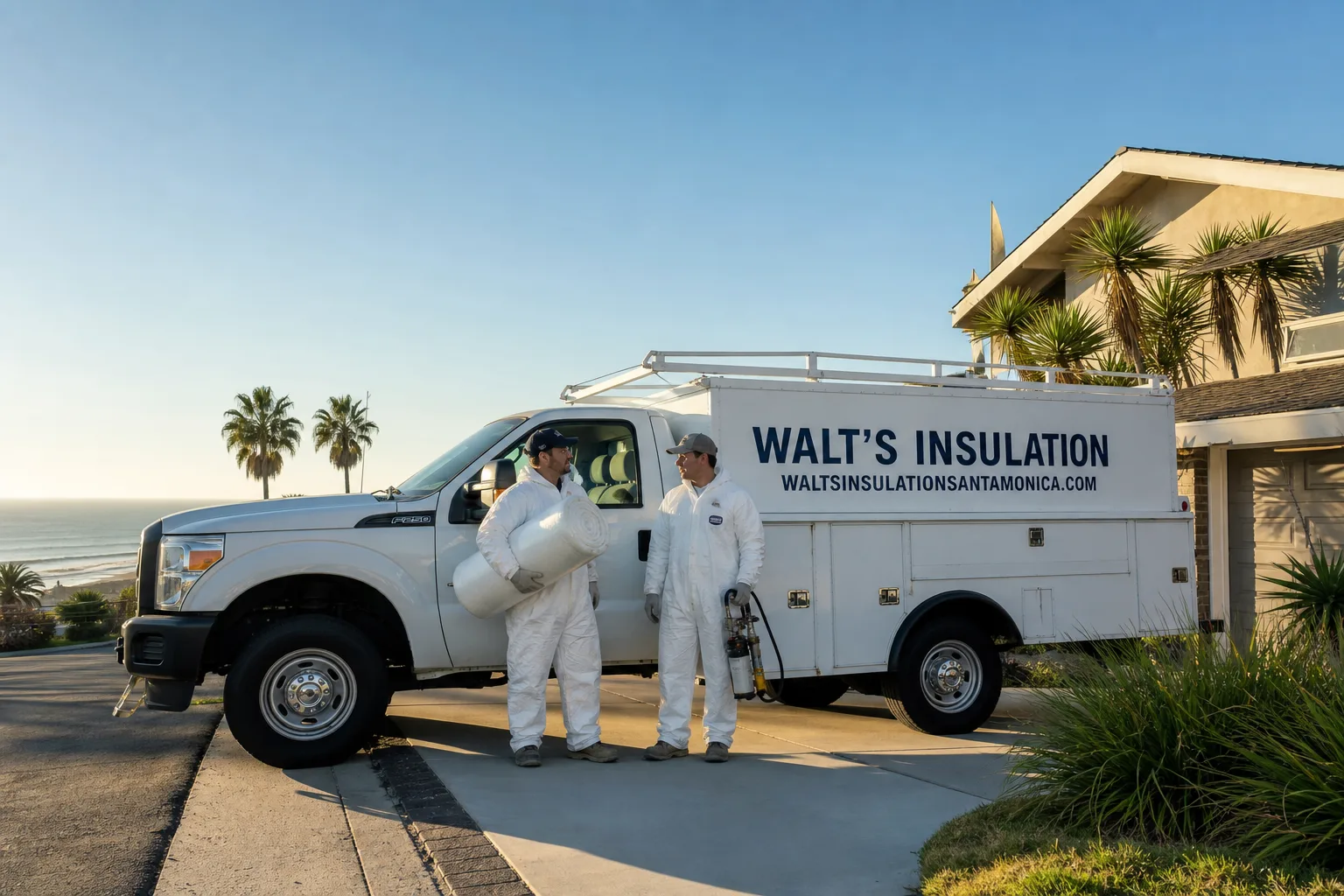
Fast, Reliable Attic Insulation Across Culver City
Attic insulation in Culver City typically runs $1,800 to $4,600 for a full retrofit on a 1,200 to 1,800 square foot home, depending on whether we’re blowing in cellulose, dense-packing walls, or installing spray foam against the roof deck. Most jobs are done in a single day, and we answer the phone live when you call (424) 396-5828. If your home was built before 1950, which most Culver City houses were, the insulation situation is usually bad enough that adding more is only half the job. The other half is fixing what the marine layer has done to whatever is already up there.
We know Culver City attics because we’ve worked in them for over 25 years. The bungalows off Overland Avenue, the Spanish Colonials near Carlson Park, the converted warehouse spaces in the Hayden Tract – they all have different problems, and none of them respond well to a one-size-fits-all insulation job.
Key Takeaways for Culver City Homeowners
- Most Culver City homes built from the 1920s through the 1940s have zero original wall insulation and under-insulated attics. Retrofit work here is fundamentally different from new construction.
- The coastal marine layer means moisture control in your attic is just as important as the R-value you’re adding. Fiberglass batts get matted and useless when condensation hits them year after year.
- A typical attic insulation job in Culver City runs $1,800 to $4,600. We give exact written quotes before any work starts, and second opinions on any written estimate are free.
- Walt’s Insulation is owner-operated, founded in 2000, with a lifetime workmanship guarantee called the Done Right Promise. If it’s not done right, we make it right.
- We serve all of Culver City, including the 90230 and 90232 zip codes, plus Marina del Rey, El Segundo, Beverly Hills, and Santa Monica.
Why Walt’s Insulation Is the One Down the Road for Culver City
We’re not a franchise and we’re not a call center. Walt’s Insulation was founded in 2000 by Walt Brenner, and we’re still owner-operated today, with a published address and license number. When you call, a live person answers – at 2 a.m. or 2 p.m., it doesn’t matter. That matters when you’re standing under a dripping attic hatch on a foggy February morning and you need someone who actually knows what a 1930s plaster-over-lath ceiling means for an insulation retrofit.
Our technicians are background-checked and uniformed, so when someone walks into your house on Lucerne Avenue or along Higuera Street, you know exactly who they are. And every job we do, from a simple attic top-up to a full replacement with spray foam and baffles, is covered by the Done Right Promise. That’s a lifetime workmanship guarantee, in writing, from a business that has been in our communities for over 25 years.
We stock materials for Culver City’s older housing stock specifically: dense-pack cellulose for plaster walls, closed-cell foam for roof decks, baffles sized for 1920s rafter bays. When a job needs a weird part, we don’t order it and hope. We carry it.
Our Attic Insulation Services in Culver City
Every home here has its own set of problems, but most Culver City attics fall into a few categories. Here’s what we actually do when we get called out, and how it applies to the houses we see from Culver Boulevard up to the base of Baldwin Hills.
Blown-In Attic Insulation
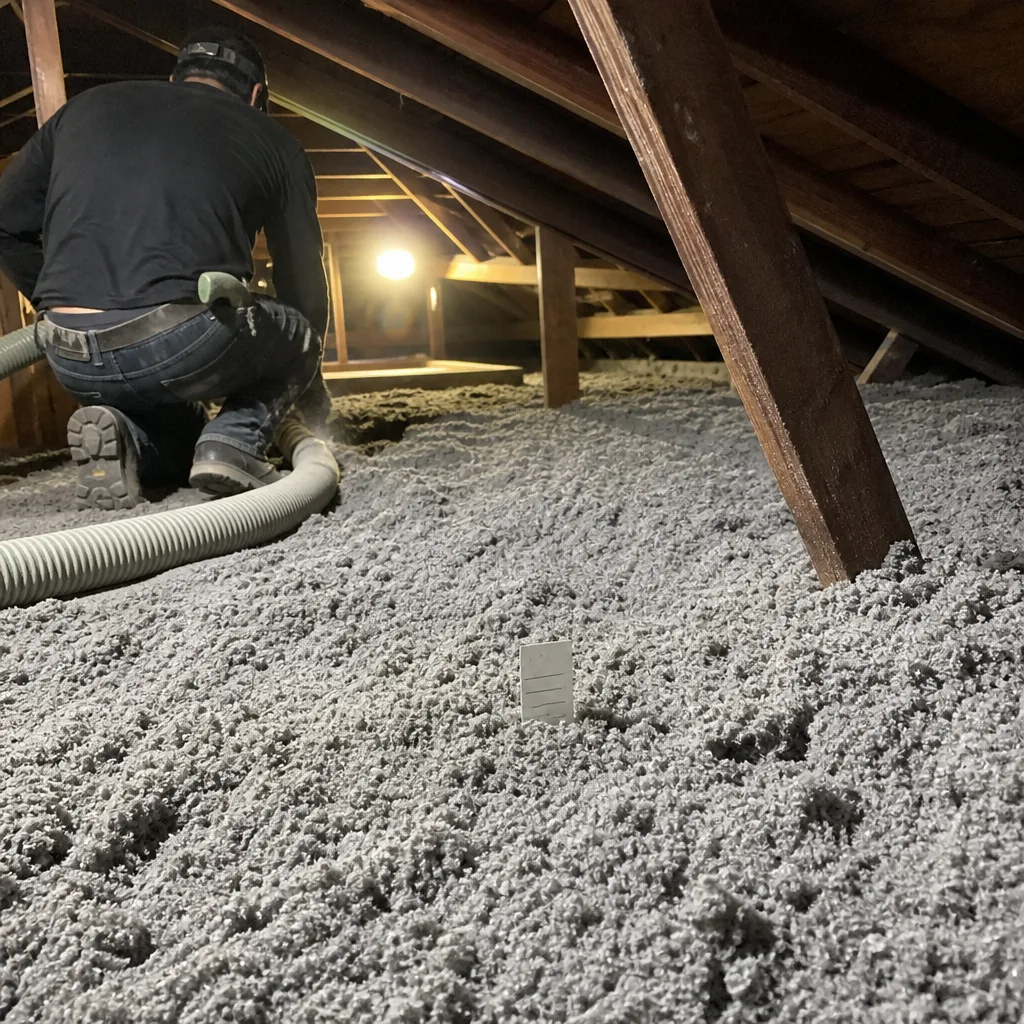
Blown-in cellulose or fiberglass is the most common attic insulation we install in Culver City, and for good reason. The flat or low-slope roofs on many 1920s and 1930s bungalows make batts awkward to place properly, especially around original framing. Blowing in insulation gets into every corner, around every old rafter tail, and it’s fast. In a 1937 Spanish Colonial Revival near Veterans Memorial Park, we blew R-38 of cellulose across a 1,400 square foot attic in about four hours. Before we did that, the attic had maybe R-11 worth of 40-year-old fiberglass, matted down from decades of marine-layer moisture. That’s the difference between a house that holds heat and one that bleeds it through the ceiling all winter.
Attic Batt Insulation
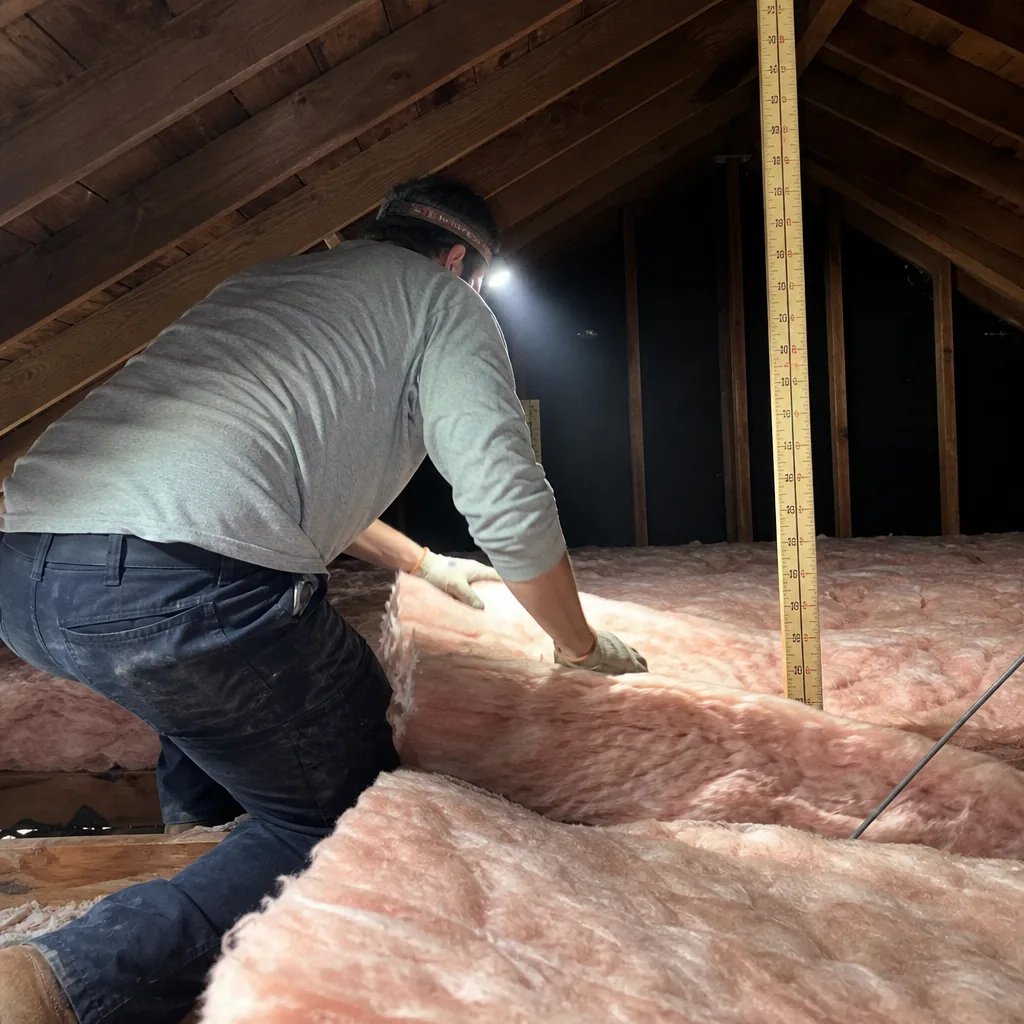
Batt insulation still has its place in Culver City homes, especially when the attic has been fully cleaned out or when we’re working in a new addition. We install Owens Corning and Knauf batts in a range of R-values, but here’s the thing we tell every homeowner: batts only work if the attic is properly air-sealed first. In a city where the morning overcast rolls in off the Pacific nearly every day, an unsealed attic means batts end up soaked, matted, and useless. In Culver City, batt installation is a finishing step, not a standalone fix. We prep the attic floor, seal penetrations, and then lay the batts right.
Attic Insulation Top-Up
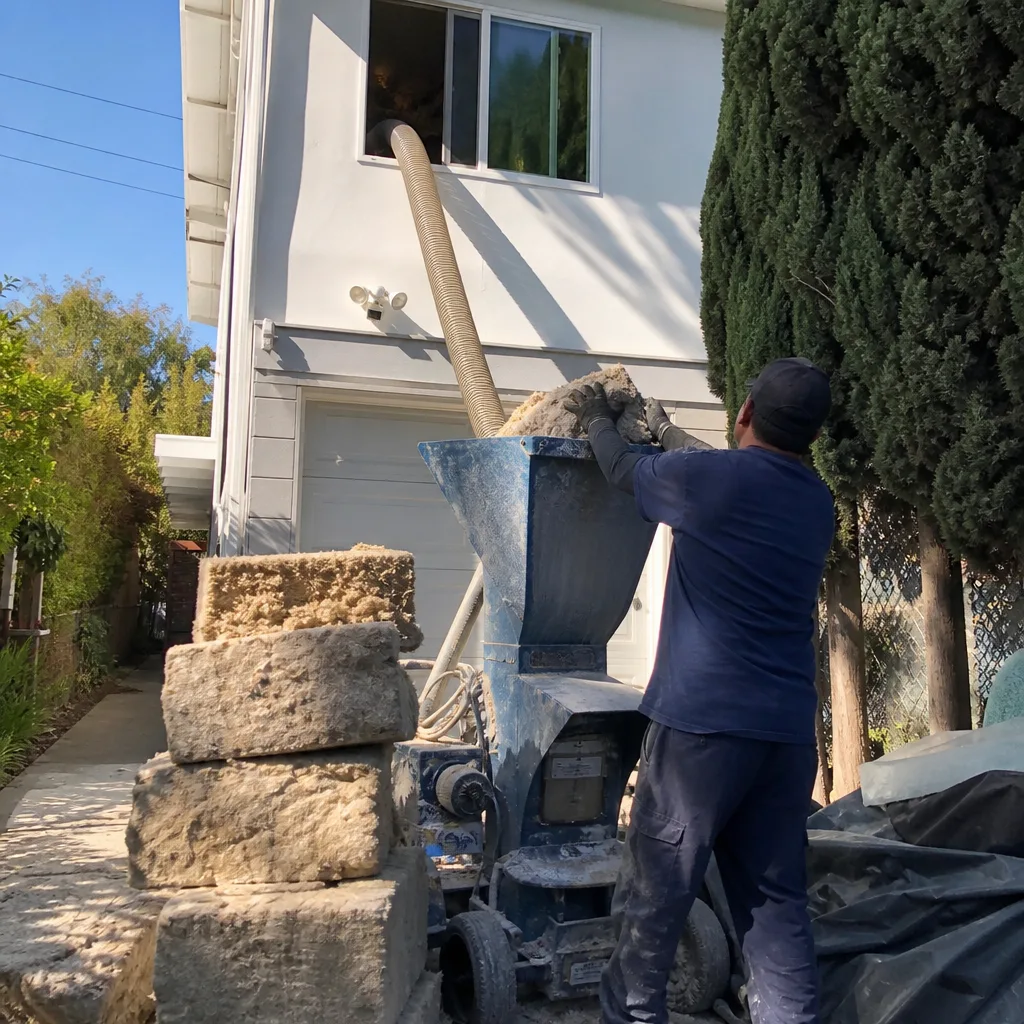
A top-up is exactly what it sounds like: adding new insulation on top of what’s already there. But in Culver City, we’re careful with top-ups, because the existing insulation is often hiding a problem. If your attic has old fiberglass that’s been sitting under a leaking roof vent or a poorly flashed skylight from the 1980s, blowing new cellulose on top just buries the problem. We inspect first, every time. If the existing material is dry and intact, a top-up is the fastest, cheapest way to bring an R-19 attic up to R-38 or R-49. Most top-ups in Culver City run $900 to $1,800 depending on square footage and how much we’re adding. Call (424) 396-5828 and we’ll give you an exact number.
Attic Insulation Replacement
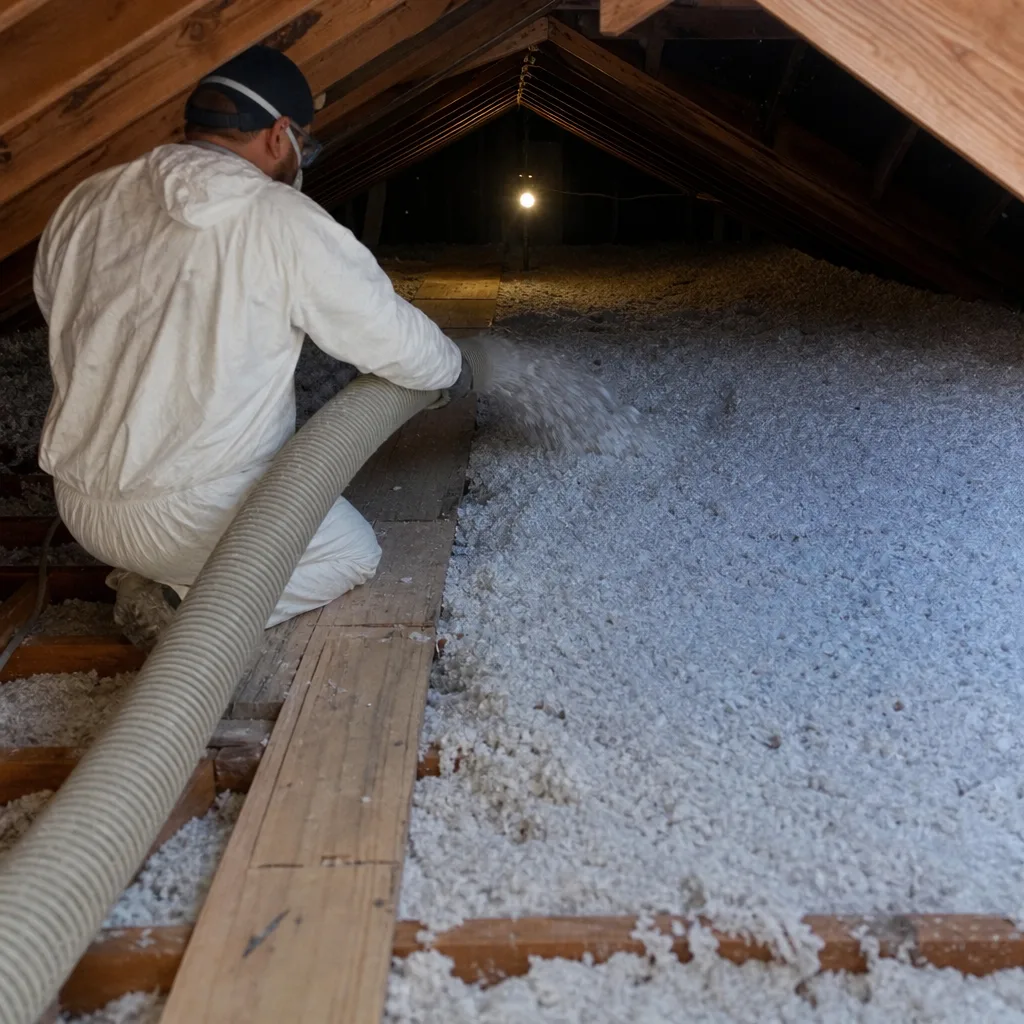
When insulation has been wet, chewed through by rodents, or compacted from decades of storage boxes, topping up isn’t the answer. Replacement means we remove everything, clean the attic, and start fresh. We see this a lot in Culver City homes that have been passed down through families, where the attic has accumulated 60 years of holiday decorations, old VHS tapes, and fiberglass that’s black with dust and whatever leaked through the roof in 1998. Full replacement in a Culver City attic usually runs $2,200 to $5,500, and the price depends mostly on whether we need to remove and dispose of contaminated material and whether we’re adding baffles and air sealing at the same time. We always recommend air sealing during a full replacement. It’s the only time the attic is empty enough to do it properly.
What happens when you call
- 1
A real person answersNo phone trees - you reach a local pro.
- 2
You get an upfront price rangeHonest numbers before anyone is dispatched.
- 3
A background-checked tech heads outLicensed & insured, dispatched right away.
- 4
You approve before work beginsNothing starts until you say go.
Attic Baffles and Ventilation Prep: The Culver City Moisture Fix
Here’s the thing about Culver City that people in Burbank or Pasadena don’t deal with: the marine layer. Our mornings are gray and damp for most of the year, and that moisture works its way into attics through any gap it can find. In an unvented or poorly vented attic, that moisture condenses on the underside of the roof deck, drips onto whatever insulation is below, and over time reduces R-value, grows mildew, and rots framing. Baffles are the solution. They hold insulation back from the eaves and create a clear air channel from soffit vents to ridge vents, so moisture-laden air moves out instead of sitting in your attic. In Culver City, we install baffles on almost every attic job we do. It’s not an upsell. It’s how you keep the new insulation from meeting the same fate as the old stuff.
Trusted Brands We Service in Culver City
We install products from manufacturers we know will perform in Culver City’s specific conditions. That means Johns Manville and Knauf batts for standard attic floors, Rockwool for fire-resistant and sound-dampening applications, and CertainTeed blown-in fiberglass when the job calls for a clean, consistent fill. We keep these in regular rotation because we know how they behave under a coastal marine layer, in unvented attics, and inside the old-growth framing you find in a 1930s bungalow near the former MGM lot. If a competitor’s quote specifies some generic “quality insulation,” ask them what brand. We’ll tell you exactly what’s going in and why.
Common Attic Insulation Problems We See in Culver City Homes
- Marine-layer condensation has matted your fiberglass. We see this constantly in the 90232 zip around Lindberg Park and Blanco Park. Fiberglass that’s been wet repeatedly loses its loft and its R-value. It looks dry on top but it’s flat and dead underneath.
- Plaster-over-lath ceilings are hiding settled insulation. In 1920s bungalows near Carlson Park, the plaster holds everything in place visually while heat escapes through gaps you can’t see from the living room. We find attics where the insulation has settled to half its original depth.
- Original one-pipe attic ventilation is inadequate. A lot of Culver City’s older homes were built with minimal roof ventilation, which was fine when attics were just storage, but not fine when we’re adding R-38 above your living space. The moisture has to go somewhere.
- Rodents have turned your insulation into a nest. Raccoons, squirrels, and rats love attics, and Culver City’s older homes have plenty of entry points. Chewed, soiled insulation needs removal and replacement, not a top-up.
Pricing for Attic Insulation in Culver City, CA
Here’s what we actually charge in Culver City, no hedging:
- Blown-in attic insulation: $1,200 to $2,800 for a typical 1,000 to 1,600 square foot attic, depending on R-value and prep work.
- Attic insulation top-up: $900 to $1,800 when the existing insulation is salvageable.
- Full attic insulation replacement: $2,200 to $5,500, including removal, disposal, air sealing, and new material.
- Baffles and ventilation prep: $350 to $900 depending on how many rafter bays we’re working in and the condition of existing vents.
- Dense-pack cellulose into plaster walls: $3,000 to $7,000 for a full 1920s bungalow, done from the exterior or interior depending on your siding.
We give exact written quotes before we start, and the price on that paper is the price you pay. We also offer a free second opinion on any written estimate from another company, and there’s no trip charge inside the service county. Seniors and veterans always get 10% off. Always. And any repair over $200 gets $40 off. Call (424) 396-5828 for a quote specific to your attic.
The Culver City Retrofit Problem, Solved
Here’s what makes Culver City different from practically anywhere else in Los Angeles County. Our residential neighborhoods were built out during the MGM studio boom between the 1920s and 1940s, which means the houses have plaster-over-lath walls and no wall cavities to speak of. You can’t just open a wall and stuff batts in, because there’s no cavity to stuff. The walls are plaster directly on wood lath, with maybe an inch of dead air behind them. That means attic insulation here is never just about the attic. If you’re losing heat through your ceiling, you’re also losing it through your walls, and the correct fix is dense-pack cellulose or injection foam into the existing wall assembly, paired with attic work.
Now layer on the coastal marine layer. Culver City sits in California Title 24 Climate Zone 8, which sounds technical but just means: persistent morning overcast, mild year-round temperatures, and enough ambient humidity to matter. Inland cities like Burbank or Pasadena mostly need to block heat. Culver City homes need to manage moisture, and that changes how we insulate. A house in Burbank can be treated with R-38 of blown fiberglass and be done. A house off Sepulveda Boulevard with a 1930s roof needs baffles, air sealing, and a vapor diffusion strategy if you don’t want mildew blooming above your bedroom ceiling.
On a 1936 Spanish Colonial Revival bungalow near the Hayden Tract, our crew found exactly this. Original plaster-over-lath walls with zero insulation, and an attic that had been topped up with loose fiberglass decades ago. The marine layer had done its work: the fiberglass was matted, damp, and full of dust. We removed the waterlogged material, installed closed-cell spray foam against the roof deck with baffles at the eaves, and dense-packed the exterior wall cavities. The homeowner told us the rooms stayed noticeably warmer on overcast mornings, and the musty smell that had been creeping down the stairs was gone.
That’s the job here. Not just adding R-value, but fixing the specific failure modes of 1920s and 1930s construction in a marine climate. If a contractor quotes you attic insulation without mentioning moisture or your walls, they don’t understand Culver City. Call us at (424) 396-5828. We do.
We Also Serve Cities Near Culver City
Our crews are out in Culver City nearly every day, and we also cover Marina del Rey, El Segundo, Beverly Hills, and Santa Monica. If you’re in one of those areas and need Attic Insulation work done right, the same crew and the same lifetime Done Right Promise applies. Live person on the phone, 24/7, at (424) 396-5828.
Serving Culver City, CA - Our Local Coverage Area
We’re based in the Culver City area and know this community well. Use the map below to see our service coverage - if you’re nearby, we can almost certainly help.
FAQs: Attic Insulation in Culver City
Because your walls likely have no cavity to insulate. In a 1920s plaster-over-lath bungalow, heat escapes through the ceiling before it has a chance to leak through the walls. Your attic is the biggest single source of heat loss, and it’s also the easiest place to fix. Sealing and insulating the attic floor, or insulating the roof deck itself, addresses the biggest energy loss first. Wall insulation can be done through dense-packing or injection foam, but in Culver City we almost always start with the attic because the payback is faster and the job is less invasive. Call (424) 396-5828 for an exact recommendation for your house.
Not necessarily. Old fiberglass batts in Culver City attics often look dry on top but are matted and moisture-damaged underneath, especially in unvented attics where the marine layer has been condensing for years. If the batts are flat, dark, or compressed, topping up won’t restore the R-value. We inspect the existing material first, for free, and tell you whether a top-up makes sense or whether replacement is the honest call. The last thing you want is new insulation sitting on top of a moisture problem. Call us at (424) 396-5828 and we’ll tell you straight.
Yes, completely different. A 1920s bungalow has a wood-framed attic with plaster ceilings below. A converted warehouse in the Hayden Tract often has a metal roof over steel framing or tilt-up concrete, with no attic cavity at all in the traditional sense. Those buildings usually need closed-cell spray foam applied directly to the underside of the roof deck to create an air and vapor barrier, not blown fiberglass. The HVAC systems in those spaces are fighting uninsulated metal and concrete, and the insulation strategy has to match. If you own or lease a converted creative office space in the Hayden Tract, call us at (424) 396-5828. We’ve done these retrofits.
It depends on your roof assembly and your attic’s ventilation. Closed-cell spray foam creates an air and vapor barrier and works well when you’re conditioning the attic or when the roof deck itself needs to be insulated. Dense-pack cellulose is better for attics that stay vented and for retrofitting walls. In Culver City’s marine climate, the deciding factor is often moisture: if your attic traps humidity, spray foam against the roof deck can work beautifully because it doesn’t absorb moisture and it blocks vapor diffusion. If you have a vented attic with good soffit and ridge ventilation, dense-pack cellulose is more cost-effective. We’ll look at your specific roof and tell you which one is right. Free, honest, no pressure. (424) 396-5828.
If your attic has soffit vents on the overhangs, you need baffles before any insulation is added, especially in Culver City where the marine layer makes ventilation critical. Baffles keep the insulation from blocking the airflow path from the soffit vents to the ridge or roof vents. Without them, the lower edge of your insulation gets pulled up against the sheathing, the airflow stops, and condensation builds up. You can check yourself: look for daylight at the eaves from inside the attic, and see if existing insulation is touching the roof sheathing. If you can’t see daylight or the insulation is packed against the roof deck, you need baffles. We install them on almost every Culver City job we do because the alternative is a wet attic. Call (424) 396-5828 and we’ll inspect it for free.
Call Walt’s Insulation for Attic Insulation in Culver City
If you live in Culver City and your attic hasn’t been touched in 30 years, or you’re feeling drafts, or your upstairs rooms won’t hold heat on gray mornings, call us. Walt’s Insulation is the one down the road: locally owned, owner-operated, with a published address and license number, founded by Walt Brenner in 2000. A live person answers when you call (424) 396-5828. We’ll inspect your attic, tell you exactly what’s going on, and give you a written quote that won’t change. Free estimates, free second opinions, no trip charge inside the county. And every job is covered for life by the Done Right Promise. If it’s not done right, we make it right. That’s the promise, and we’ve backed it for over 25 years.
Written by Walt Brenner, Owner at Walt’s Insulation, serving Culver City and the surrounding communities.